Concrete Progressing Demystified: Vital Details on Mudjacking and Polyjacking for Home owners
Concrete leveling is an essential facet of home maintenance, impacting both safety and security and appearance. Home owners commonly deal with the difficulty of making a decision in between mudjacking and polyjacking for their concrete repair requirements. Each approach has its one-of-a-kind procedures and benefits. Recognizing these differences can bring about even more informed choices. As the conversation unravels, the effects of these methods on lasting home security come to be progressively significant. What will home owners focus on in their concrete repair work services?
Recognizing Concrete Progressing: Why It Issues
While many home owners might overlook the importance of concrete leveling, comprehending its importance is necessary for maintaining architectural honesty and aesthetic charm. Irregular concrete surface areas can cause different issues, including journey risks, water merging, and compromised structures. These problems not just affect the safety of visitors and homeowners however can also diminish the overall value of a residential property.
In addition, ignoring concrete progressing can result in costly repair work gradually, as the underlying sources of sinking or working out might aggravate. Properly leveled concrete improves the performance of outdoor areas, driveways, and sidewalks, guaranteeing they stay visually appealing and safe. Furthermore, dealing with leveling issues promptly can avoid additional damages to adjacent structures and landscape design. Home owners that focus on concrete progressing are making a smart financial investment in both their residential property's safety and its long-term value, eventually adding to a much more practical and enjoyable living atmosphere.
What Is Mudjacking?
Mudjacking is a concrete progressing method that involves injecting a mix of products underneath sunken slabs to increase and support them. This procedure uses several benefits, including cost-effectiveness and very little interruption to the surrounding area. It is specifically perfect for situations where concrete surface areas have actually worked out because of soil disintegration or other ecological factors.
Process Review
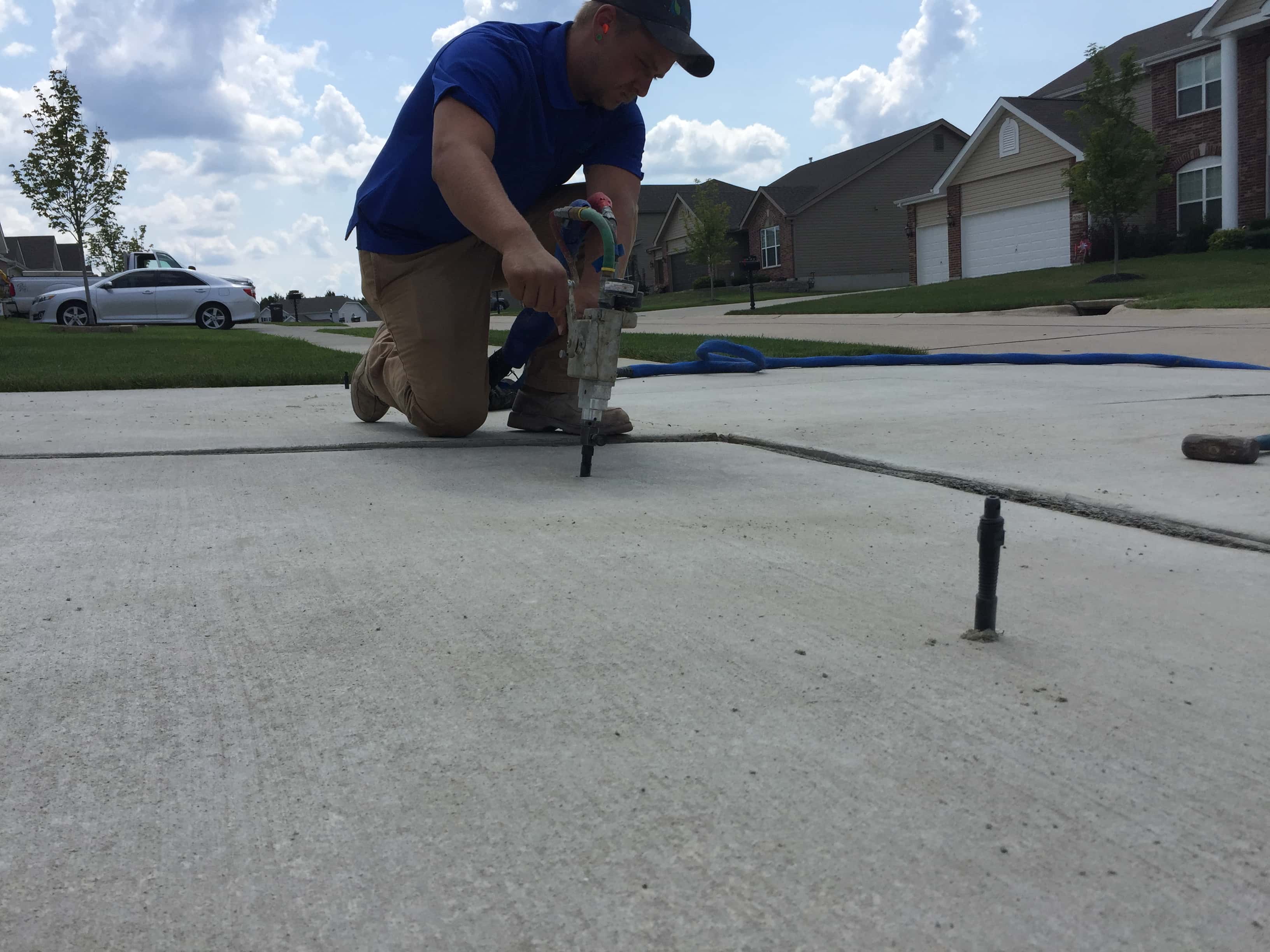
When concrete pieces sink or work out, mudjacking becomes a sensible remedy to restore their degree. The procedure involves infusing a mix, often made up of water, dirt, and concrete, underneath the sunken slab. Originally, little holes are drilled into the concrete surface area, enabling gain access to for the shot. Once the mixture is pumped right into the gaps, it increases and strengthens, successfully raising the slab back to its original position - mudjacking vs polyjacking. This method is not only efficient but also cost-effective contrasted to finish piece substitute. Mudjacking typically takes a couple of hours to complete, allowing homeowners to use the surface shortly after the procedure concludes. Overall, mudjacking offers a reliable method for dealing with uneven concrete surfaces
Benefits of Mudjacking
Many homeowners may not be acquainted with the term, mudjacking deals numerous substantial advantages for attending to sunken concrete slabs. This method is cost-efficient compared to complete slab substitute, making it an affordable choice for several. Furthermore, mudjacking is a relatively quick procedure, often requiring marginal downtime, which can be beneficial for busy families. The technique also promotes environmental sustainability, as it utilizes existing products instead of requiring brand-new concrete. In addition, mudjacking improves security and aesthetic appeals by recovering the degree of driveways, patio areas, and walkways, therefore preventing potential journey dangers. Generally, mudjacking is a practical remedy that improves residential or commercial property value while dealing with underlying structural problems with effectiveness and efficiency.
Suitable Situations for Use
Homeowners dealing with issues with unequal concrete slabs frequently discover mudjacking to be a viable option. This method is particularly reliable for homes experiencing working out issues, such as driveways, outdoor patios, and pathways. Areas with minor to moderate sinking are optimal candidates, as mudjacking brings back the level without substantial disruption. Furthermore, it is suitable for structures that have not sustained serious damages, allowing for stabilization before further wear and tear happens. Mudjacking is also helpful in scenarios where fast repair work are required, as it normally needs much less time than substitute. In addition, it is a cost-efficient option, specifically when contrasted to full concrete replacement. On the whole, mudjacking serves as a practical option for house owners aiming to recover their concrete surfaces effectively.
The Mudjacking Process: Step-by-Step
Mudjacking, a popular method for lifting and maintaining sunken concrete, entails a systematic process that assures reliable outcomes. The procedure begins with the assessment of the afflicted area, where experts identify the level of the sinking and the underlying problems. Next, small openings are pierced right into the concrete slab, generally spaced a couple of feet apart. Following this, a specialized mixture, frequently made up of water, soil, and cement, is pumped into these holes under stress. This combination fills up voids underneath the piece and increases the concrete to its original setting. Once the slab is lifted, the openings are filled up and sealed to avoid water infiltration and more disintegration. The surface area is smoothed, and house owners are advised to avoid heavy web traffic on the newly leveled concrete for a brief duration to guarantee correct curing. This method is minimally invasive and reliable, making it a favored option for house owners dealing with concrete issues.
Advantages of Mudjacking
Various advantages make mudjacking an enticing service for addressing sunken concrete. It is a cost-effective method compared to finish concrete substitute. Property owners can conserve substantial quantities of money while recovering the functionality and appearance of their concrete surface areas. Additionally, mudjacking is a fast process, often finished within a few hours, permitting locals to return to normal tasks without prolonged disturbance.
Furthermore, mudjacking uses green materials that decrease ecological impact, making it a sustainable selection - BAM Basements. The strategy additionally offers durable results, properly addressing voids below the concrete and avoiding future sinking. Since mudjacking needs marginal excavation, it maintains the surrounding landscape, making sure that hardscapes and gardens continue to be intact. The treatment can be applied to different surfaces, including walkways, patio areas, and driveways, enhancing its convenience. Collectively, these advantages placement mudjacking as a practical remedy for house owners taking care of irregular concrete
What Is Polyjacking?
Polyjacking is a modern technique used for lifting and supporting worked out concrete pieces. This process entails infusing a specialized foam under the concrete, which expands and fills up spaces, effectively elevating the surface. Recognizing the advantages of polyjacking can offer understanding into its growing popularity amongst house owners and contractors.

Polyjacking Refine Summary
A prominent method for concrete leveling, polyjacking entails infusing a specialized polyurethane foam beneath irregular slabs. The process starts with drilling tiny holes right into the impacted concrete surface. When the openings are created, a service technician inserts a hose pipe connected to a pump, which injects the expanding foam below the slab. As the foam expands, it fills spaces and lifts the concrete to its initial placement. The product cures swiftly, generally within a couple of hours, enabling for fast use the surface. After the lifting process is total, the openings are loaded and secured to recover the concrete's appearance. Polyjacking is commonly favored for its performance and very little disturbance compared to standard approaches of concrete repair service.
Benefits of Polyjacking
The effectiveness of polyjacking hinges on its capacity to promptly restore concrete surface areas with marginal interruption. This method makes use of a high-density polyurethane foam that increases and hardens, giving a durable foundation for sinking concrete. Unlike traditional mudjacking, polyjacking is lighter, reducing the threat of further settling. Additionally, it treatments quickly, allowing homeowners to use their driveways, walkways, or patios practically promptly after application.
Polyjacking is likewise ecologically friendly, as the foam is composed of non-toxic products. Its resistance to water absorption helps stop future damage from disintegration. The durability of polyjacking boosts its value, typically outliving other fixing techniques. On the whole, polyjacking offers an effective, sturdy, and cost-effective service for concrete leveling demands.
The Polyjacking Process: Step-by-Step
Various homeowners look for reliable remedies for uneven concrete surface areas, and polyjacking has actually arised as a preferred selection. This technique involves a series of systematic actions to recover concrete degrees. First, the location is evaluated to recognize the degree of the settling or training called for. Next, tiny openings are drilled into the influenced concrete piece to allow for polyurethane foam shot.
When prepared, specialized tools injects the foam below the piece, where it increases and fills up spaces, efficiently raising the concrete to its initial setting. The growth process is kept track of closely to ensure accurate leveling. After the preferred elevation is accomplished, any excess foam is trimmed away, and the drilled openings are sealed. The concrete surface is enabled to heal, ensuring a durable and stable surface. This efficient process minimizes disturbance, making polyjacking an enticing option for property owners wanting to recover their concrete surface areas.
Contrasting Mudjacking and Polyjacking: Which Is Right for You?
How can property owners choose in between mudjacking and polyjacking for their concrete progressing needs? To make an educated option, they must consider numerous factors, including price, rate of installation, and the underlying source of the concrete problem. Mudjacking generally makes use of a combination of cement, soil, and other materials, using a cost-effective remedy for bigger, more comprehensive jobs. It can take longer to heal and might not be suitable for smaller sized spaces. - mudjacking alternative Des Moines
On the various other hand, polyjacking makes use of a lightweight polyurethane foam, which expands to fill up gaps swiftly. This technique often tends to be more pricey but offers faster healing times and much less disturbance to the surrounding location. Property owners should additionally examine their lasting requirements; polyjacking typically supplies better longevity and resistance to future settling. Inevitably, speaking with a specialist can assist property owners establish the ideal technique for their specific situation.
Frequently Asked Questions
The Length Of Time Does Concrete Progressing Generally Last After the Refine?
Concrete leveling usually lasts details between 5 to ten years, depending on elements such as dirt conditions, environment, and upkeep. Punctual fixings and regular inspections can extend the life expectancy of the progressing procedure substantially.
Can I Do Mudjacking or Polyjacking Myself?
Mudjacking and polyjacking can be tried by home owners with the right tools and expertise. Professional support is usually suggested to guarantee safety, effectiveness, and long-lasting outcomes, as the processes can be difficult and complicated.
What Are the Expenses Related To Mudjacking and Polyjacking?
Expenses linked with mudjacking and polyjacking commonly vary from $300 to $1,500, depending on the dimension and complexity of the job. Homeowners ought to think about extra variables like materials and labor when approximating complete expenses.
Just how Do I Know if My Concrete Demands Leveling?
Signs that concrete requirements leveling include visible fractures, irregular surface areas, pooling water, and gaps between slabs. House owners ought to on a regular basis check pathways, driveways, and foundations for these signs to identify if leveling is essential.
Will Concrete Progressing Influence My Landscape Design or Bordering Frameworks?
Concrete progressing can potentially affect landscape design and surrounding structures, as the process might trigger soil variation or activity. Property owners need to evaluate their environments and consult experts to decrease any type of feasible influence on their home.